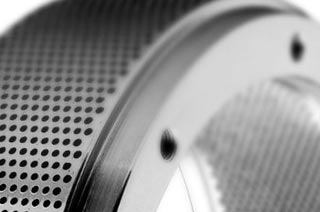
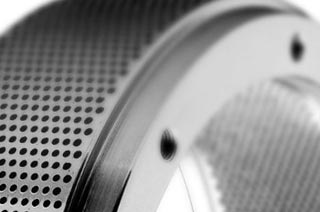
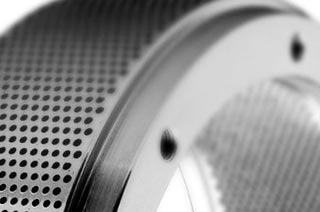
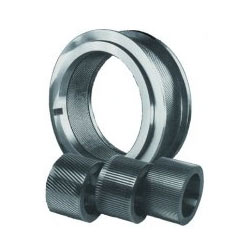
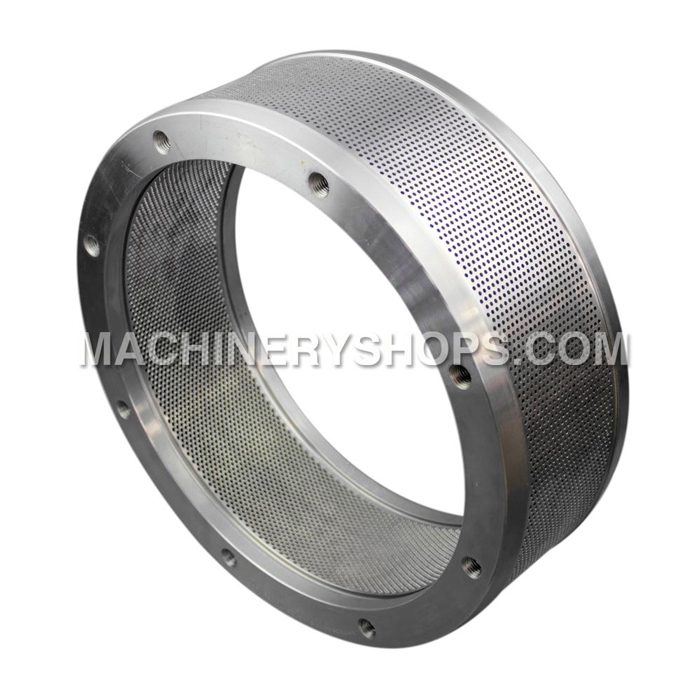
The pellet die ring is the perforated, cylindrical (or in some designs, flat) metal component through which conditioned mash is forced by the rolls to form pellets, with each hole in the ring acting as a small extrusion channel that compresses and shapes the mash into a cylindrical pellet as it passes through. Die rings are precision-engineered components, typically made from hardened alloy steel, and represent one of the most significant ongoing wear-part costs in pellet mill operation.
Die specifications — including hole diameter, working length (the length of the hole through which the pellet is actually compressed and extruded), compression ratio and relief design — are selected based on the formulation being pelleted, since denser or more fibrous formulations typically require different die specifications than lighter, more easily compressed mixtures to achieve good pellet quality without excessive wear or energy consumption.
Die material and heat treatment are chosen to balance hardness (for wear resistance) against toughness (resistance to cracking under the cyclic mechanical stress of continuous operation), with manufacturers typically offering a range of alloy and treatment options suited to different feed types — abrasive, high-mineral formulations generally call for harder die specifications than lower-abrasion formulations such as fish feed mash.
Die rings wear gradually with use, with hole diameter increasing slightly over time due to abrasion, which can affect pellet diameter consistency and durability as the die ages; most feed mills track die usage in production tonnes to plan replacement before performance degrades significantly, rather than waiting for an obvious failure or quality complaint to prompt a die change.
Die changeover procedure is itself an important operational consideration, since a die represents a significant capital cost and improper handling, storage or installation can shorten its service life considerably — dies are typically stored carefully to avoid corrosion or physical damage to the hole surfaces when not in use, and installation requires careful attention to correct seating and clamping torque to avoid uneven stress during operation.
Some feed mills maintain a die inventory covering several different specifications to suit the range of products they manufacture, allowing relatively quick changeover between formulations with significantly different pelleting requirements, while smaller operations producing a narrower product range may operate successfully with just one or two die specifications kept in rotation as wear items are replaced.

 Foshan, China
 Crawfordsville, United States of America