Pellet mill knives are the stationary or rotating cutting blades mounted just outside the discharge face of the pellet die, positioned to trim extruded pellets to the desired length as they emerge continuously from each die hole. Without knives, pellets would continue extruding as a continuous strand rather than being cut into the discrete, uniform-length pieces expected of finished pelleted feed.
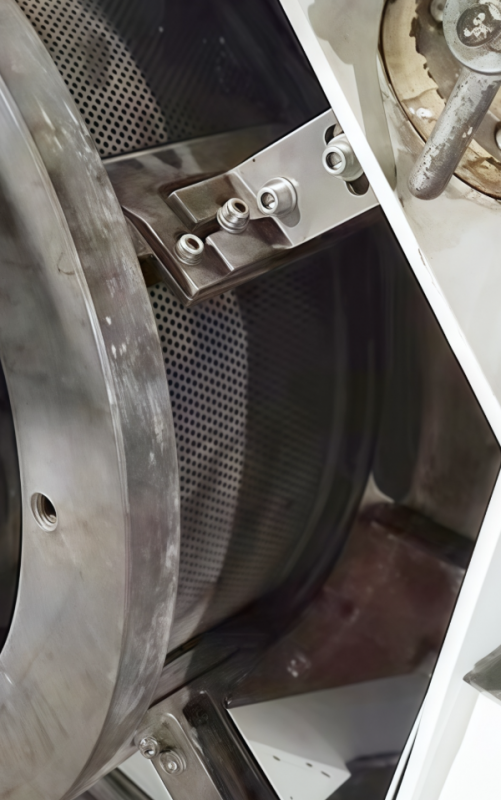
Knife distance from the die face is the primary adjustable parameter controlling pellet length: positioning knives closer to the die produces shorter pellets, while greater clearance allows pellets to extend further before being cut, producing longer pellets — most pellet mills allow this distance to be adjusted via a mounting bracket or similar mechanism without requiring a full die change.
Knife sharpness directly affects cut quality: a sharp knife cleanly severs the extruded pellet strand, while a dull or worn knife tends to crush or tear the pellet at the cut point rather than cutting cleanly, generating additional fines and reducing the proportion of intact, properly formed pellets in the finished product — for this reason, knife condition is a routine, relatively frequent inspection point in pellet mill operation.
Knife material and mounting design must withstand both the abrasive wear of continuous contact with hot, freshly extruded pellets and the mechanical stress of operating in close proximity to the rotating die face, with most knives constructed from hardened steel and mounted on an adjustable bracket or arm that allows for both distance adjustment and replacement without extensive disassembly of the pellet mill.
Number and spacing of knives around the die circumference also affects pellet cutting consistency, particularly on larger dies, since a single knife covering the full die width may need to traverse a longer arc relative to die rotation speed than multiple, more closely spaced knives, with the appropriate configuration typically specified by the pellet mill manufacturer based on die size and expected production rate.
Because knife wear is continuous and relatively predictable under normal operation, many feed mills maintain a routine knife replacement schedule based on production tonnage or operating hours, rather than waiting for an obvious decline in pellet cut quality to prompt replacement, treating knives similarly to other regularly scheduled pellet mill wear parts.

 Foshan, China

 Crawfordsville, United States of America