The conditioning process is the operational stage immediately before pelleting in which mixed mash is treated with steam, heat and moisture for a controlled retention time within a conditioner, preparing the material for compression and extrusion through the pellet die. Conditioning is generally regarded as one of the most influential single operations affecting finished pellet quality, alongside formulation itself.
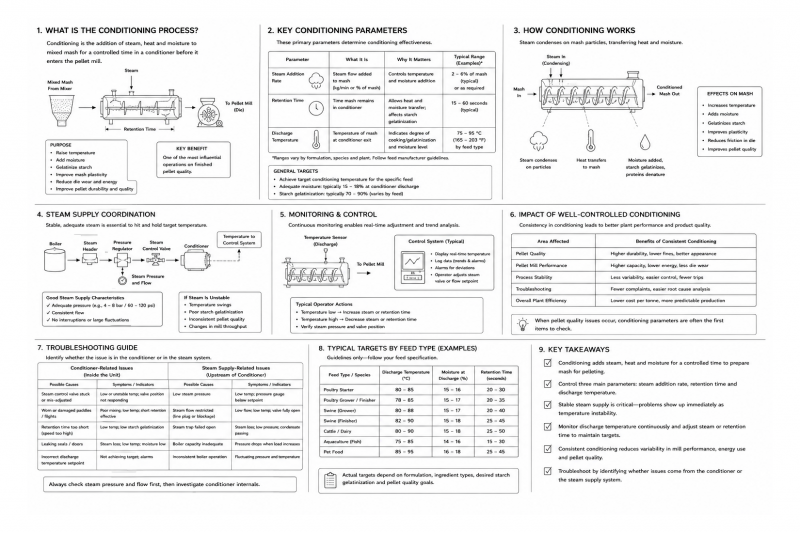
During conditioning, steam addition rate, conditioner retention time and discharge temperature are the primary operational parameters controlled, typically guided by target conditioning temperature specifications appropriate to the formulation being processed — different feed types and species often have different optimal conditioning temperature ranges based on ingredient composition and desired starch gelatinization levels.
Conditioning operation requires careful coordination between the conditioner and the upstream steam supply, since the conditioner's ability to hit and hold a target temperature depends on consistent, adequate steam pressure and flow being available exactly when and in the quantity needed — interruptions or fluctuations in steam supply show up almost immediately as conditioning temperature instability, even if the conditioner itself is functioning perfectly.
Operators typically monitor conditioning temperature continuously via an installed temperature sensor at or near the conditioner discharge, often with the reading displayed and logged through the plant's process control system, allowing both real-time adjustment during production and after-the-fact review of conditioning consistency across a production run or shift.
Consistent, well-controlled conditioning operation directly reduces variability in subsequent pellet mill performance, energy consumption and finished pellet quality, which is why conditioning parameters are often among the first variables investigated when troubleshooting pellet quality complaints or unexplained changes in pellet mill throughput.
Conditioning operation troubleshooting often starts by distinguishing between problems originating in the conditioner itself (such as a malfunctioning steam valve, worn paddles affecting mash movement through the unit, or an incorrect retention time setting) versus problems originating upstream in steam generation or distribution, since the corrective action required differs substantially depending on where in the system the actual root cause lies.