Elevator buckets are the individual scoop-shaped containers mounted at regular intervals along the belt or chain of a bucket elevator, each designed to capture a measured quantity of bulk material at the boot section and carry it upward through the elevator leg before discharging it at the head. Bucket shape, spacing and material of construction vary depending on the specific product being handled and the elevator's discharge style.
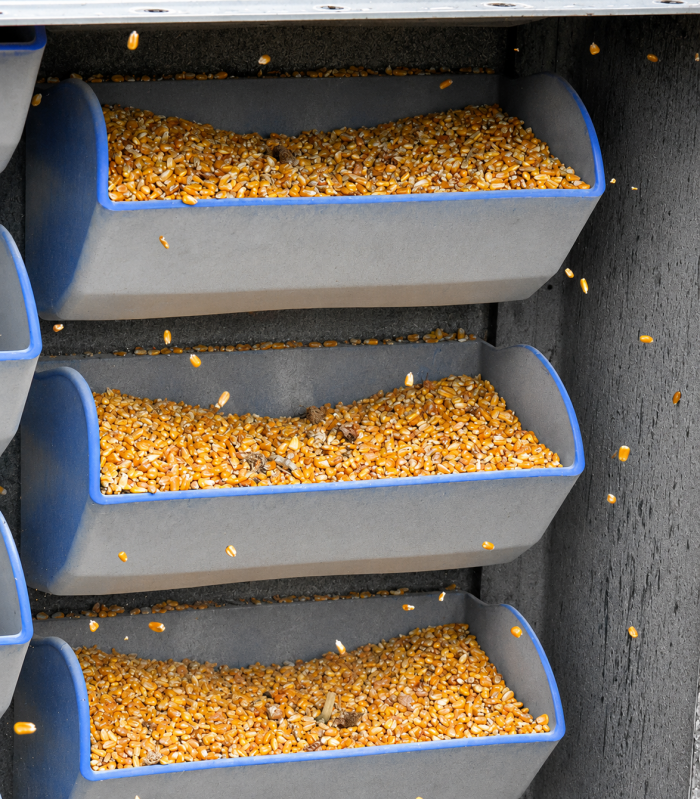
In centrifugal discharge elevators, buckets are typically spaced further apart and shaped to allow material to be thrown clear at the head pulley by centrifugal force, while continuous discharge elevators use closely spaced buckets with a shape that allows material to flow gently from one bucket into the next as they pass over the head pulley, reducing impact damage to fragile products such as pellets.
Bucket material is commonly molded polymer (such as polyethylene or nylon) for lighter-duty or food-contact applications, or steel for heavier-duty service handling more abrasive materials; polymer buckets offer the advantage of lower weight (reducing overall belt and drive loading) and quieter operation, while steel buckets generally offer greater durability under high-abrasion conditions.
Bucket mounting method — whether bolted directly to the belt, or in chain-and-bucket designs, attached via brackets to the chain links — affects both the ease of individual bucket replacement and the overall robustness of the attachment under the repeated loading and unloading cycles experienced throughout the elevator's operating life.
Bucket wear, cracking or loosening from their mounting points are common maintenance issues, and a damaged or missing bucket not only reduces elevator capacity but can also cause spillage within the enclosed casing, leading to material buildup that affects elevator balance and performance, and in some cases creating a secondary dust or housekeeping issue within the otherwise enclosed leg.
Routine inspection of elevator buckets, typically performed when the elevator is stopped for other maintenance, focuses on checking for cracking (particularly at the mounting points, which experience the highest stress concentration), wear at the bucket lip or leading edge, and confirming all bucket fasteners remain properly tightened, since a single failed bucket can sometimes cause cascading damage to belt or chain if not identified and corrected promptly.

 Foshan, China
 Bandırma, Turkey