Auger flighting is the helical, screw-shaped element that runs along the length of a screw conveyor's central shaft, and is the actual component responsible for pushing material along the conveyor as the shaft rotates. While "screw conveyor" refers to the complete piece of equipment, flighting specifically refers to this helical element, which is typically the single component most directly exposed to abrasive wear from constant contact with the conveyed material.
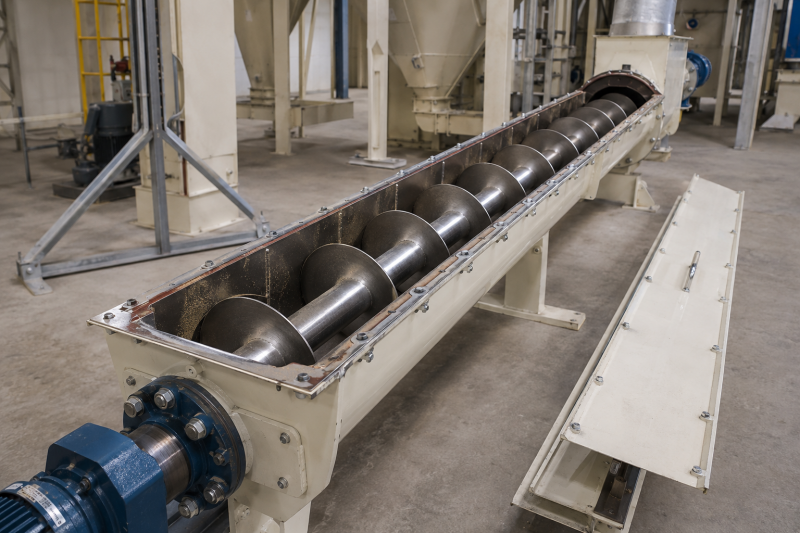
Flighting can be manufactured as a continuous helix welded to the central shaft, or in some designs as individual flighting segments or sectional flights bolted or welded together, with the choice affecting both manufacturing cost and the practicality of replacing a damaged or worn section without necessarily replacing the entire screw assembly.
Flighting pitch — the axial distance covered by one complete turn of the helix — and flighting diameter together determine the conveyor's theoretical capacity per revolution, with shorter-pitch flighting generally favored for metering applications requiring finer control, and standard or longer-pitch flighting favored for bulk transfer applications prioritizing throughput over precise control.
Flighting thickness and material specification are typically increased for more abrasive duty, with some high-wear applications using flighting fabricated from thicker, harder-wearing steel, or in some cases fitted with replaceable wear edges or hardfacing overlay specifically at the outer edge of the flighting where contact with the conveyor trough and the conveyed material is most concentrated.
Wear on flighting typically manifests first as a gradual reduction in flighting outer diameter or thinning at the leading edge, both of which reduce conveying efficiency by effectively increasing clearance between the flighting and the conveyor trough — most feed mills track conveyor performance (rather than only inspecting flighting condition directly) as an indirect way of identifying when wear has progressed to the point that flighting replacement is warranted.
Because flighting wear is generally gradual and progressive, scheduled replacement based on tonnage throughput or operating hours is a common maintenance approach, similar in principle to other wear-part replacement strategies used elsewhere in a feed mill, allowing flighting replacement to be planned during scheduled downtime rather than responding to an unplanned performance failure.

 Shang hai, China