Material conveying, as a stage within the overall feed manufacturing process, encompasses every point at which ingredients, intermediate products or finished feed are physically transported between processing steps — from receiving through grinding, batching, mixing, conditioning, pelleting, cooling and ultimately to bagging or bulk loadout. While conveying itself does not change the product, the cumulative conveying steps in a feed mill collectively determine much of the plant's layout, energy consumption and potential for cross-contamination if not properly managed.
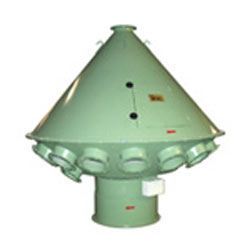
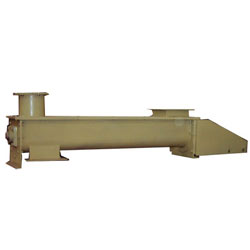
A typical feed mill uses a combination of conveying technologies suited to different duties: bucket elevators and belt conveyors for moving large volumes vertically and horizontally, screw conveyors for metering and shorter transfers, and pneumatic conveying for enclosed transport of fines, dust or lighter materials, with diverters, gates and airlocks used throughout to control and direct material flow between these systems.
Conveying system layout is typically designed around minimizing the number of transfer points and direction changes a product must pass through, since each transfer point represents an opportunity for spillage, dust generation, and — particularly relevant where multiple formulations share common conveying equipment — residual material carryover between batches.
Plant layout decisions made early in a feed mill's design have long-lasting implications for conveying efficiency, since retrofitting conveying routes in an existing building is typically far more expensive and disruptive than incorporating efficient routing into the original design — this is one reason conveying system design receives significant engineering attention during new mill construction or major expansion projects.
Conveying system design and sequencing also directly affect drug carryover risk, since residual material in conveying equipment can contaminate subsequent batches if not properly flushed or cleaned between production runs involving different formulations, making conveying route planning a quality and compliance consideration as much as a pure material-handling efficiency question.
Capacity matching between successive conveying steps is also an important design consideration, since a bottleneck at any single point in the conveying sequence limits the throughput of the entire line regardless of how well other sections are designed — feed mill engineers typically size each conveying element with some margin above the nominal production rate specifically to avoid creating an unintended capacity constraint partway through an otherwise well-designed material flow path.

 Jiaozuo City, China