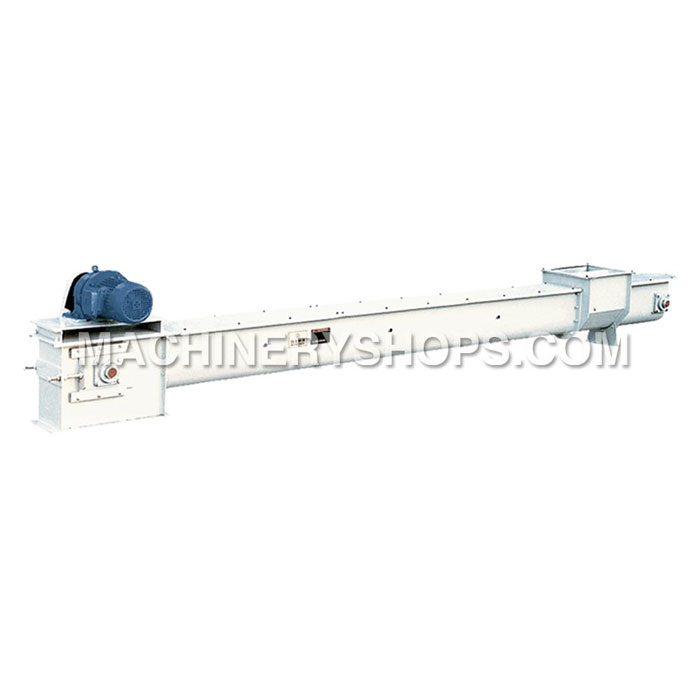
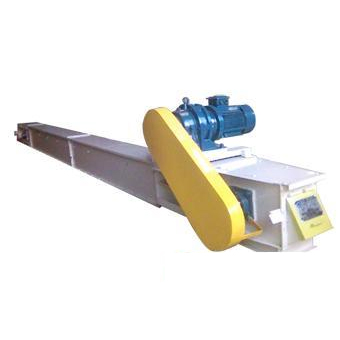
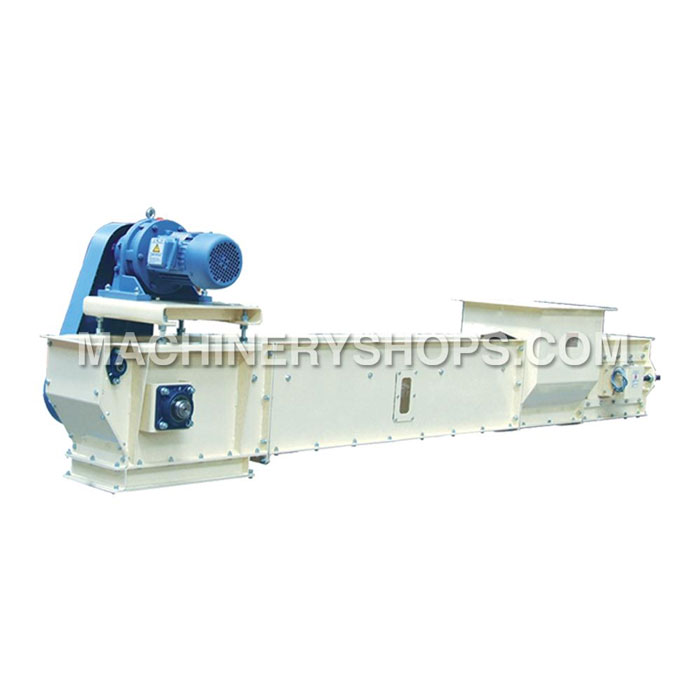
A drag chain conveyor moves bulk material horizontally or at a slight incline using a continuous chain fitted with flights (paddles) that drag the product along the bottom of an enclosed trough. Unlike a screw conveyor, the chain and flights do not directly compress or shear the material, which makes drag chain conveyors a gentler option for products sensitive to damage, such as finished pellets.
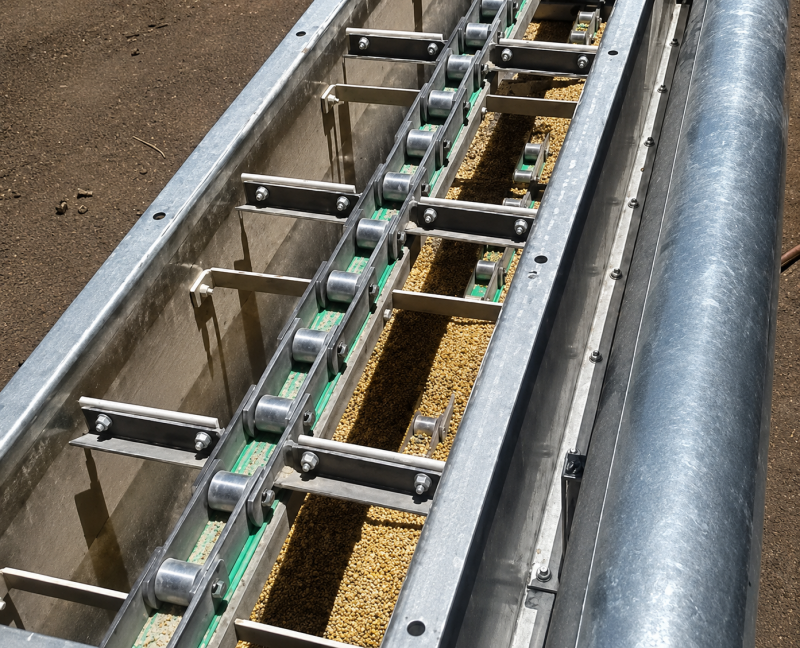
In feed mills, drag chain conveyors are often used to move large volumes of grain, meal or pellets over longer horizontal runs than would be practical with a screw conveyor, while still keeping the material enclosed and protected from contamination and weather. Multiple inlet and outlet points can be incorporated along the length of the trough, allowing the same conveyor to service several storage bins or processing points.
Two main design variants exist: round-bottom (or tubular) drag conveyors, where the chain and flights run through a closed circular or oval trough, and flat-bottom designs, where the trough cross-section is rectangular. Round-bottom designs are generally better suited to handling fines and powdery materials with minimal residual buildup, while flat-bottom designs are often easier to access for inspection and cleaning.
Because drag chain conveyors can be configured with multiple inlets and outlets along their length, they are frequently selected as the primary horizontal distribution conveyor beneath a bank of storage bins, replacing what would otherwise require several shorter belt or screw conveyors with associated transfer points — each transfer point being a potential source of dust generation, spillage and cross-contamination risk.
Wear typically occurs at the chain, flights and trough liner, and proper tensioning of the chain is important to avoid excessive wear or jamming; most designs include a tensioning device at one end of the conveyor to compensate for chain stretch over its service life. Trough liners, much like wear liners elsewhere in a feed mill, are typically replaceable wear items rather than part of the conveyor's structural housing.
Drag chain conveyors are generally more energy-efficient per tonne moved than pneumatic systems for the same duty, though they require more maintenance attention than a simple belt conveyor, given the larger number of wear components (chain, flights, liners, sprockets) involved in their construction compared to a belt conveyor's comparatively simple belt-and-pulley arrangement.

 Shang hai, China