A diverter valve directs the flow of bulk material from one inlet to one of two or more outlets within a feed mill's conveying system, allowing a single conveyor or pipe run to serve multiple downstream destinations such as different storage bins, processing lines or bagging points. Diverters can be manually operated or automated, with the latter typically controlled via the mill's process control system to route material based on production scheduling.
Common designs include flap-type diverters, where a pivoting flap is positioned to block one path and open another, and slide-gate or rotary diverters used where a more positive seal is required to prevent cross-contamination between products — particularly important when switching between medicated and non-medicated feed runs.
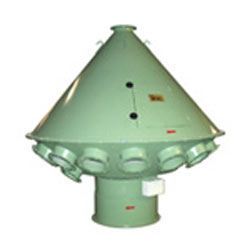
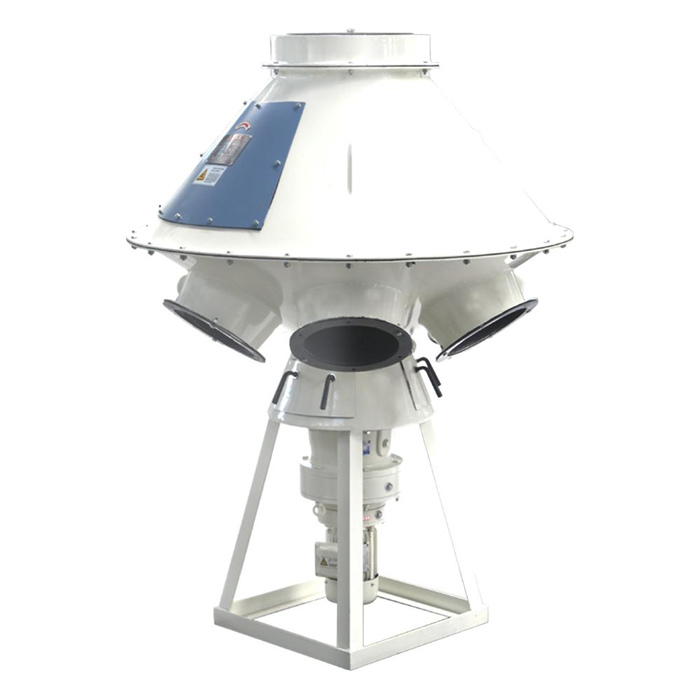
Two-way diverters, directing flow between just two possible outlets, are the simplest and most common configuration, but multi-way diverters capable of routing to three or more destinations are also used, particularly at central distribution points in larger mills where a single elevator discharge or conveyor needs to service many storage bins from one location.
Actuation method is an important selection consideration: pneumatically actuated diverters offer fast, reliable switching and are well suited to automated control systems, while manually operated diverters remain common in smaller installations or for infrequently changed routing where the cost and complexity of automation is not justified.
Diverter valves are a key point of focus in carryover prevention programs, since residual material trapped in a poorly maintained diverter can contaminate a subsequent batch. The internal geometry of a diverter — particularly any ledges, corners or dead zones where material can accumulate rather than flowing cleanly through — has a significant effect on how readily the unit can be flushed clean between product changes, which is why diverter design is sometimes specifically selected with sanitation and carryover risk in mind, not just routing function.
Regular inspection and cleaning, along with attention to seal wear, are standard parts of a feed mill's sanitation and quality control routine wherever diverters are installed, and many mills incorporate diverter position confirmation (via limit switches or position sensors) into their control system logic, so that an operator or automated system can verify the diverter actually moved to the intended position rather than assuming it did so based on the command sent.

 Foshan, China

 Bandırma, Turkey