Bulk density describes the mass of a material per unit volume as it naturally settles in storage or handling, including the air space between individual particles, and is typically expressed in units such as kilograms per cubic meter or pounds per cubic foot. Bulk density differs from the true (particle) density of the material itself, since it accounts for the packing arrangement and void space between particles rather than the density of the solid material alone.
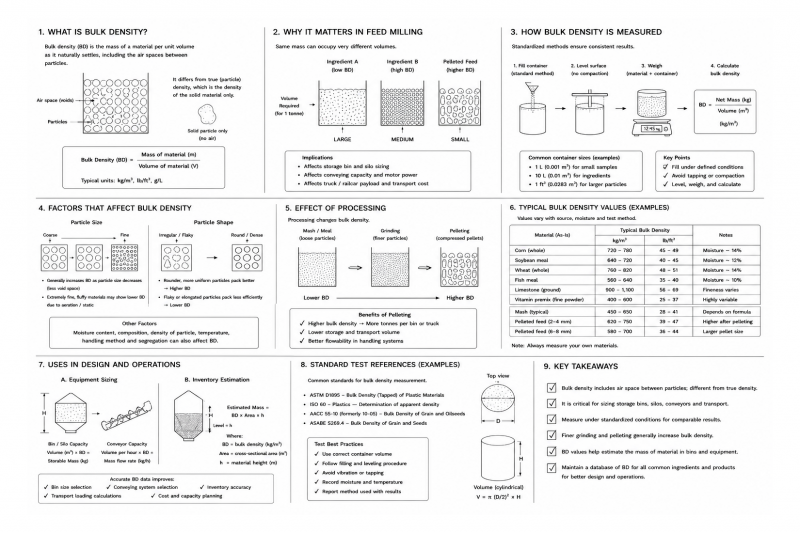
In feed milling, bulk density is an important practical consideration for sizing storage bins, silos and conveying equipment, since the same mass of two different ingredients — or the same ingredient before and after grinding or pelleting — can occupy significantly different volumes depending on bulk density, directly affecting how much can be stored or moved within a given piece of equipment.
Bulk density is typically measured by carefully filling a container of known volume with the material under standardized conditions (avoiding artificial compaction or excessive settling during filling) and weighing the result, with standardized test methods existing specifically to ensure measurements are comparable between different ingredients, batches or testing laboratories.
Particle size and shape have a significant effect on bulk density for a given material: finer grinding generally increases bulk density up to a point by allowing particles to pack more closely together with less void space, though extremely fine, fluffy materials can sometimes behave counterintuitively if static or aeration effects interfere with normal settling and packing behavior.
Pelleting generally increases bulk density compared to the original mash, since the pelleting process compresses loosely packed mash particles into denser, more uniformly shaped pellets, which is one of the practical handling and transport advantages of pelleted feed over mash or meal form — the same mass of finished product simply takes up less storage and transport volume after pelleting.
Bulk density figures are also commonly used in reverse — to estimate the mass of material present in a partially filled bin or silo based on a measured or estimated fill level, making accurate bulk density data for each commonly stored ingredient a practically useful reference for inventory management as well as equipment sizing decisions.
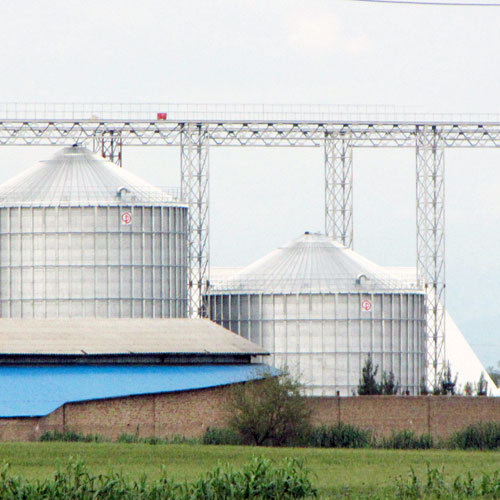

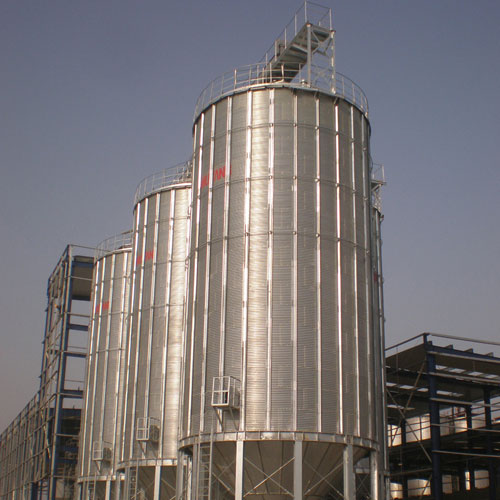

 Yangzhou, China