The mixing process combines individually batched ingredients into a uniformly blended mash, using a feed mixer to ensure that every portion of the finished batch contains the correct, evenly distributed proportion of each ingredient. Mixing typically follows batching and grinding (where applicable) and precedes conditioning and pelleting, or directly precedes bagging/bulk loadout for mash (unpelleted) feed products.
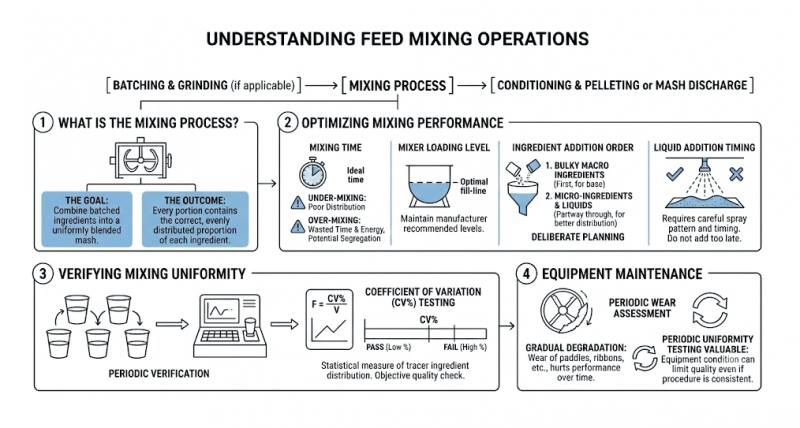
Mixing time, mixer loading level, and the order and method of ingredient addition all affect mixing performance, with most mixer manufacturers providing recommended mixing times based on mixer design and typical formulations; under-mixing risks poor ingredient distribution, while excessive mixing time beyond what is needed wastes time and energy without improving uniformity further, and in some designs can even cause ingredient segregation.
The sequence in which ingredients are introduced to the mixer is often deliberately planned rather than arbitrary: bulky macro ingredients are typically added first to establish the base of the batch, with micro-ingredients and liquids often introduced partway through the mixing cycle (once some initial blending has occurred) to promote more even distribution than would result from adding everything simultaneously at the start.
Liquid addition during mixing, where formulations call for liquid ingredients to be added directly in the mixer rather than via post-pelleting coating, requires particular attention to spray pattern and timing, since liquid introduced unevenly or too late in the mixing cycle may not have sufficient time or mechanical action to distribute thoroughly before the batch is discharged.
Mixing uniformity is typically verified periodically through coefficient of variation (CV%) testing, which statistically measures how evenly a tracer ingredient is distributed across multiple samples taken from a single mixed batch, providing an objective check on whether the mixing process is performing to specification rather than relying on visual inspection or production experience alone.
Mixer wear over time — particularly wear to paddles, ribbons or other internal agitator components — can gradually degrade mixing performance even without any change to mixing time or procedure, which is one reason periodic uniformity testing remains valuable even for mixing processes that have historically performed well, since equipment condition rather than procedure may eventually become the limiting factor in maintaining consistent mixing quality.
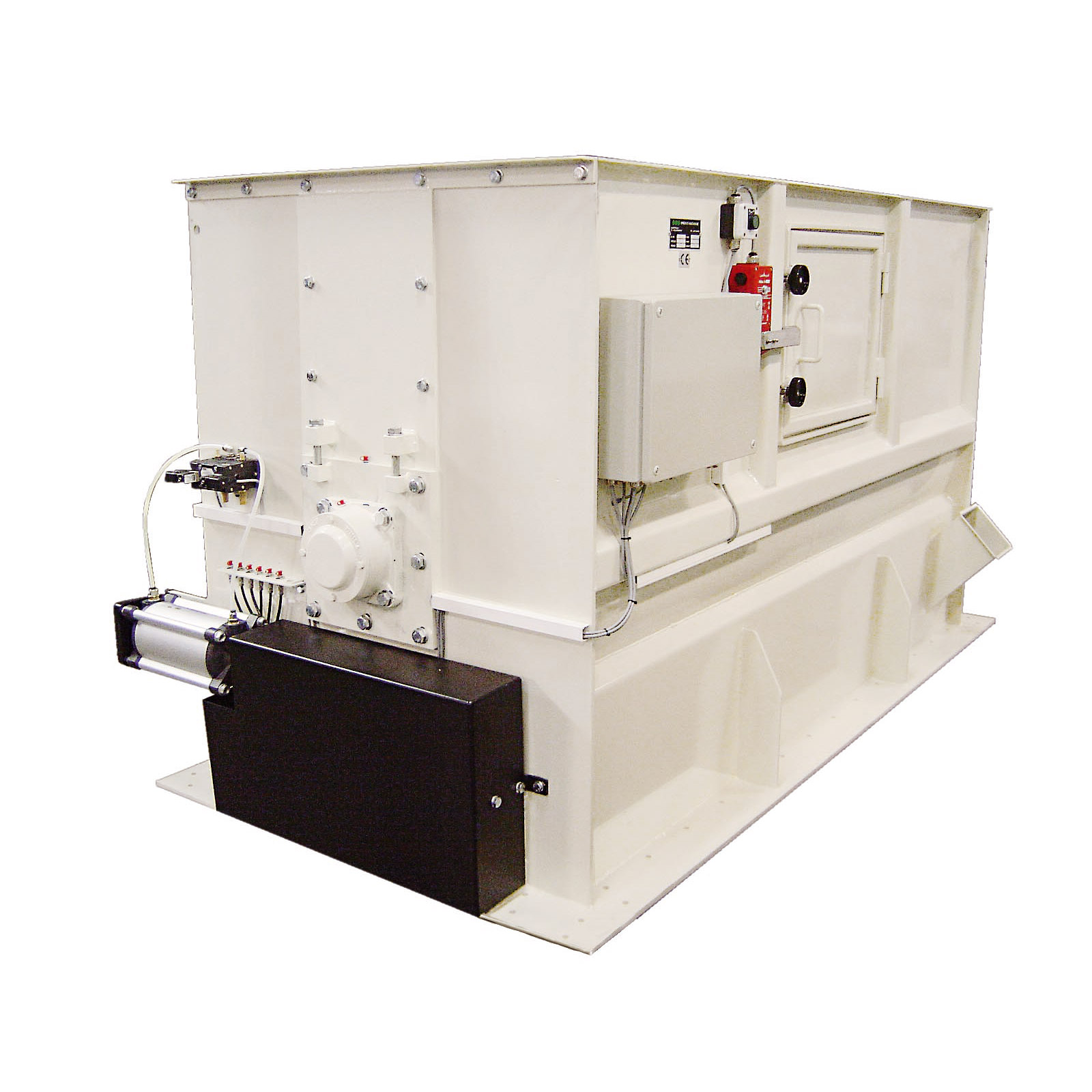

 Esbjerg O, Denmark
 Bandırma, Turkey
 Jiaozuo City, China