Moisture content in feed refers to the proportion of water present in a feed ingredient or finished product, typically expressed as a percentage of total weight, and is one of the most fundamental quality parameters tracked throughout feed manufacturing. Moisture content affects nearly every stage of processing — from storage stability of raw ingredients, through grinding and conditioning behavior, to the final shelf stability and handling characteristics of finished feed.
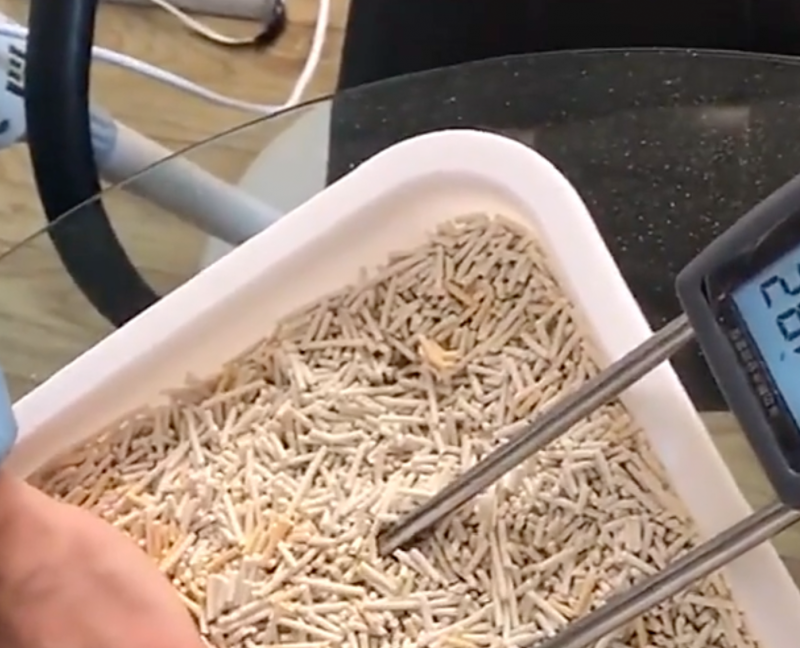
Feed and ingredients that are too high in moisture are at increased risk of mold growth, mycotoxin development and spoilage during storage, while moisture that is too low can affect pellet binding during conditioning and pelleting, since adequate moisture is one of the key factors (alongside heat and pressure) that enables starch gelatinization and good pellet formation.
Moisture testing methods range from simple, fast handheld moisture meters using electrical conductivity or capacitance principles, suitable for quick checks during receiving or production, to more precise laboratory oven-drying methods that measure moisture loss directly by weighing a sample before and after controlled drying — the latter generally considered the reference method against which faster field methods are calibrated.
Moisture is added deliberately at several points in feed processing — most notably during steam conditioning ahead of pelleting — and subsequently reduced again during cooling and, where necessary, dedicated drying, with target final moisture content typically specified to balance pellet quality, storage stability and regulatory or commercial requirements.
Moisture migration within stored bulk material is also a practical consideration distinct from the average moisture content of a batch: even a batch with acceptable average moisture can develop localized pockets of elevated moisture during storage, particularly where temperature differences within a bin or silo cause moisture to migrate and condense in cooler zones, creating localized spoilage risk that average moisture testing alone would not necessarily detect.
Because moisture specifications often appear in commercial contracts and regulatory standards for both raw ingredients and finished feed, accurate and consistent moisture testing is not just a processing quality matter but frequently a contractual and compliance requirement, with disputes over moisture content being a relatively common source of disagreement between buyers and sellers of bulk feed ingredients.

 Yangzhou, China