A feed dryer reduces the moisture content of pellets, grain or other feed products to a target level suitable for safe storage and handling, typically by passing heated air through or across a moving bed of product. While cooling alone removes some moisture from freshly made pellets, dedicated dryers are used where higher moisture feeds — such as those produced with high steam conditioning rates, or wet grain entering the mill — require additional moisture removal beyond what ambient air cooling can achieve.
Common dryer configurations in feed milling include vertical dryers, where product moves down through a column while heated air passes through, and horizontal belt or band dryers, which expose a shallower, wider product bed to drying air, often arranged in multiple stages or passes to achieve the required moisture reduction.
Drying air temperature is typically the most significant single variable affecting both drying rate and product quality outcome; higher temperatures dry product faster but increase the risk of case hardening (where the outer surface of a particle dries and hardens before moisture from the interior has had time to migrate outward), which can trap residual internal moisture and create a false impression that the product is adequately dried when checked only by surface inspection.
Multi-pass or multi-zone dryers address this risk by exposing product to drying air in stages, sometimes interspersed with short rest or "tempering" periods that allow internal moisture to migrate toward the surface between drying passes, generally achieving more uniform and reliable final moisture content than a single intense drying pass at high temperature.
Drying temperature and residence time must be carefully controlled, since excessive heat or prolonged exposure can degrade nutritional value, particularly heat-sensitive vitamins, or affect pellet quality and appearance — discoloration and surface cracking are visible signs that a dryer may be operating at too high a temperature or for too long a duration for the product being processed.
Energy efficiency and uniform airflow distribution across the product bed are key design and operational considerations for feed dryers, and because drying is typically one of the more energy-intensive steps in feed processing when used, many mills monitor specific energy consumption (energy per unit of moisture removed) as a way of tracking dryer efficiency over time and identifying when maintenance such as burner servicing or airflow adjustment may be needed.
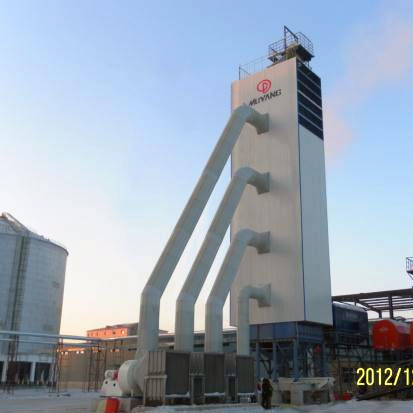

 Yangzhou, China