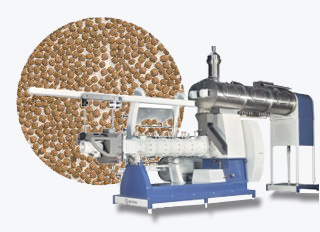
An expander is a piece of feed processing equipment that combines mechanical shear, pressure, moisture and steam to cook and texturize a feed mash before it is discharged through a die or restriction, typically just ahead of a pellet mill. Unlike an extruder, an expander generally operates at lower pressure and shear, producing a textured, partially cooked mash rather than a fully shaped, dense extrudate, and is most often used as a pre-conditioning step rather than a standalone product-forming machine.
In feed mills, expanders are commonly installed upstream of the pellet mill to improve starch gelatinization, increase pellet durability, achieve some pathogen reduction through the heat and pressure applied, and allow for the inclusion of higher levels of fat or liquid ingredients than would otherwise be possible directly in the pellet mill conditioner.
The internal screw configuration of an expander — typically featuring a series of mixing and shearing elements along the shaft, sometimes with interrupted flights or specially profiled segments — is a key design factor influencing the degree of mechanical work applied to the mash as it passes through, with different configurations available to suit different formulation types and desired cook levels.
Operating parameters such as screw speed, moisture addition, steam injection and discharge restriction (controlled by an adjustable die or cone at the expander outlet) all influence the degree of cook achieved and the resulting density and texture of the expanded mash, which in turn affects downstream pelleting performance and finished feed quality.
One of the practical benefits cited for expansion ahead of pelleting is improved pellet mill throughput and reduced specific energy consumption at the pellet mill itself, since pre-cooked, expanded mash generally requires less additional work from the pellet mill's rolls and die to achieve good pellet formation compared to mash that has only received standard steam conditioning.
Expanders also offer some pathogen reduction benefit due to the combination of elevated temperature, pressure and residence time achieved within the barrel, which is one reason expansion is sometimes specified in formulations or markets where microbiological control of the finished feed is a particular concern, alongside the pellet quality and throughput benefits.
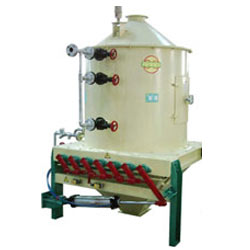
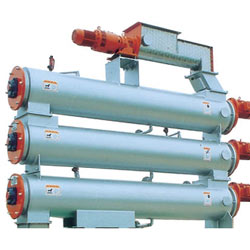
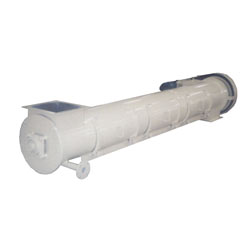

 Foshan, China

 Crawfordsville, United States of America