8th March, 2006: Cairo Poultry, the nation’s premier processed chicken producer, is slowly changing the way Egyptian buy and eat the birds. Avian flu could speed that process.
The conventional butcheries in Egypt’s alleys, where the scattered feathers or smell of blood fails to bother bystanders, may go out of business one day — not because of the avian flu scare, but because of clean and efficient industrial slaughterhouses.
Shoppers may attribute the commercial success of frozen supermarket chicken such as Koki and Americana fast food outlets including KFC to the ‘secret recipe’ used to flavor them, but the real secret is somewhat further back in the supply chain: the chicken supplier.
Cairo Poultry Company (CPC bt100 No. 20) started off as a small concern in 1978 with barely LE 1.5 million in total capital. Today, it’s a holding company with 16 subsidiaries specializing in both poultry operations and feed manufacture. Owned by El-Kharafi Group’s Kuwaiti Foods, CPC is the exclusive supplier to sister company Americana’s fast food chains, including Hardee’s and KFC. It also produces popular frozen chicken products available in supermarkets under the brand name Koki.
“Our products have gained accreditation from KFC international and are inspected by international monitors, which makes us a more hygienic and healthier replacement to the regular butcher,” says Hazem Zayed, CPC’s chief financial officer.
Zayed says CPC aims for nothing less than to be recognized as the brand of choice on the strength of its safe and healthy range of food products. CPC’s claim that it does not use any antibiotics on its livestock also distinguishes it from traditional butchers. “We serve the community, so we apply these ethics very closely,” says Zayed. “We are not after profit as much as we are after the [safety of the] environment and the community itself.”
Zayed is being modest: Sales more than doubled from LE 431 million in 2000 to LE 924 million in 2004. This year, the company expects to post consolidated sales of more than LE 1 billion. Net profits have also risen, if more modestly, climbing to over LE 57 million in 2004, compared to LE 49 million in 2000.
CPC refers to itself as a fully integrated operation because it is active in all the stages from raising chickens (known as ‘broilers) through meat consumption. The first stage, the ‘grandparent operation,’ as it is called, includes raising the first generation of chickens that will produce breeder flocks known as ‘parent stocks.’ CPC then sells part of its stocks to the market and uses the rest to produce its third generation of broilers, known as ‘breeder chicks.’
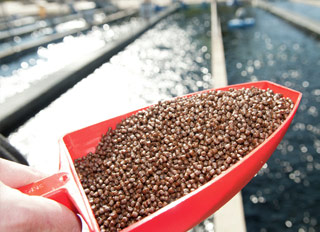
The company also makes its own poultry feed, accredited by the Ministry of Agriculture, and sells part of its production to the market. During all three stages, CPC produces an estimated 10,000 chickens every hour and around 26 million per year. Although it has exported surplus birds to the Gulf in the past, last year all of its production was consumed by the Egyptian market.
“We consider ourselves to be the country’s largest poultry producer,” says Magdy El-Sebaie, CPC general manager, who pegs Cairo Poultry’s share in the grandparent stock market at 60-62%. Its poultry feed market share has reached over 60%, while its share of processed chicken for sale at restaurants or supermarkets is over 90%.
Its top competitor is specialty foods manufacturer Wadi Foods, renowned throughout the region for its top-quality olive oils.
“They are also professionals in the field and have good breeds,” El-Sebaie says of his competition, “but their production capacities are not as large as ours.” He adds that CPC is a fully independent entity with its own broiler and food processing operations.
As fear of a possible avian flu pandemic grew worldwide last month with new cases being reported in Turkey, CPC has experienced an approximately 20% drop in sales, causing the company to lower prices.
“We take a number of security measures to protect our chicken from contamination and our avian flu risk is nil,” says Zayed. He says that Cairo Poultry’s chicken farms are located far away from over-populated areas and other chicken farms to reduce chances of infection, which he claims makes CPC chicken safe from avian flu.
“Moreover, anyone working in or visiting the chicken farms has to take a full shower on site and wear protective gear before gaining access to the farms as a means of preventing contamination,” Zayed adds.
In addition to a flock-wide vaccination program and international inspection, CPC maintains its own laboratories to test its hygiene standards.
El-Sebaie compares the effect of the avian flu scare on CPC’s growth plans to a Boeing 747 that suddenly slams on its breaks as it is about to lift off. “It will take time for the heavy airplane to go back to its runway and prepare to fly again,” he explains.
CPC’s strategy now is to avoid further damage by minimizing costs.
“We are strong enough and can tolerate any losses that may result from this temporary reaction to the avian flu rumors,” says Zayed, who adds that it is customary for sales to drop during the first three or four months of the year as a result of an increased consumption of meat during the Eid. The entire industry, he notes, is recording a decrease in sales. He also relates recent interest in the stock exchange to the change in consumer spending.
Cairo Poultry management is optimistic and believes the company’s ongoing diversification efforts protect it from the financial threat of avian flu.
“We’re seeking other means of maximizing our stakeholders’ values by managing a diverse portfolio of investments,” El-Sebaie says, citing the company’s acquisition of more than 90% of the former state-owned Egyptian Starch and Glucose Company (bt100 number 78), which it continues to develop. “So if the poultry industry faces some crises, other industries such as starch and glucose will not be affected and will, in turn, compensate for any losses.”