Production monitoring encompasses the ongoing collection and review of operational data throughout the feed manufacturing process — including throughput rates, energy consumption, equipment status, temperatures, and quality test results — typically gathered through a combination of automated process control systems and manual quality checks, and used to verify that production is running within expected parameters at every stage.
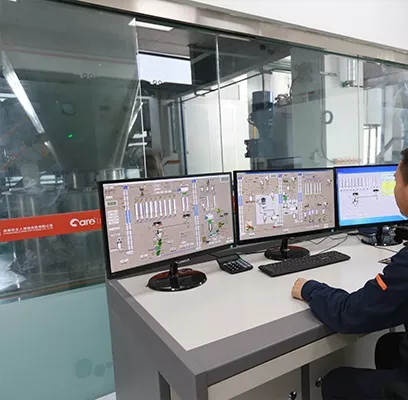
Modern feed mills increasingly rely on computerized process control and supervisory systems to centralize production monitoring, allowing operators to track multiple process stages simultaneously from a control room, receive automated alerts when parameters fall outside acceptable ranges, and maintain historical production records for traceability and continuous improvement purposes.
Alarm and alert configuration within a production monitoring system is itself an important design consideration, since a system that generates too many low-significance alerts risks operators becoming desensitized and overlooking a genuinely important alarm among the noise, while a system with too few or poorly tuned alerts may fail to flag a developing problem early enough for effective corrective action — striking the right balance is an ongoing tuning exercise rather than a one-time setup task.
Historical production data captured through monitoring systems supports not just immediate operational response but also longer-term analysis, such as correlating periods of reduced product quality with specific equipment, shifts, or formulation changes, which would be difficult or impossible to investigate retrospectively without systematic data logging in place at the time the issue occurred.
Effective production monitoring supports both immediate operational decision-making — such as identifying a developing equipment issue before it causes a quality problem or unplanned downtime — and longer-term analysis, such as benchmarking energy consumption or throughput performance over time to identify trends, maintenance needs, or opportunities for process optimization.
Integration between production monitoring data and other plant systems — such as maintenance management software, quality laboratory information systems, or enterprise resource planning platforms — is an increasing trend in feed mill operations, allowing production data to flow more seamlessly into broader business decision-making rather than remaining siloed within the control room or production floor where it was originally generated.
 Crawfordsville, United States of America
 Esbjerg O, Denmark